
In 723, finally successful after years of striving to become overking of Dal Riada, Selbach had been the latest ruler to enter a clerical life. We last mentioned him in the post Nechtan mac Derilei: King Naiton of the Picts just as he handed over power to his son Dungal, before moving on to events in Pictland. Whilst the years which followed saw that territory descend into Civil War, in the west there was also continued conflict.
Selbach and Dungal were from the Cenél Loairn, one of the two groups fighting over the supreme kingship, the other being that of Kintyre-based Cenél nGabráin, to Loairn’s south. Dungal did not last long and the Annals report that after 3 years he was “ejected from his rule[1]” at the same time as Drest was being sidelined in Pictland. Dungal was replaced by Eochaid mac Eachach from the rival clan. This led to further fighting among the Dal Riadans, including the reappearance of old Selbach, fresh from his monastery. Eochaid seems to have held on however and his reign lasted until 731 when he (of course) entered a monastery.[2] He had at least waited until Selbach had died in 730 first.
The sources are unclear as to what happened next. When Eochaid dies in 733 he is still described as king of Dal Riada, but that may not have meant he was still in charge. We are also introduced to a character called Talorc son of Congus (from Cenél nGabráin) who was at the very least a war leader (commanding an army in 731) and perhaps more. In 733, in the same year as Eochaid’s death, we are told that the new king of Cenél Loairn is Muireadhach son of Ainfcellach (the son of Selbach’s brother whom Selbach killed in 719.) Which one of these – if either – was the overking is not known. In time it would matter little.
Meanwhile, although Dungal had been deposed, he was still around and causing trouble, burning Tarbert (in Cenél nGabráin territory) in 731. The battle that same year in which Talorc son of Congus had fought was against the Picts, led by Bridei son of King Onuist[3]. Talorc lost and fled the battle scene. Not for the first time, no details are given of the background behind the battle. In amongst the many inter-relationships between Pict and Gael, the Pictish name of Talorc is not unusual, but it would be a big leap to suggest he was a disaffected Pict supporting the cause of, say, his namesake Talorc, son of Drostan who had been imprisoned in 713 and who now seemed to be leading the Atholl contingent mentioned in previous posts.
Whatever provoked the battle, it seems to have been the beginning of friction between two of the great peoples of the north. Sometime after the battle, the victor, Bridei had taken his turn in entering a monastery, this time at Tory Island off the coast of Donegal. Again we are not told the reason for this, but it was not the only contact with Ireland that we hear of. In 733 the annals tantalising tell us off a battle between two Irish armies. One of them, led by Flaithbertach, son of Loingsech, “brought a fleet with him from Fortriu[4]”, although to no avail; he did not survive.
By 733 therefore we have seen the deaths of the two Dal Riadan kings Selbach and Eochaid, although Dungal, son of Selbach is still around. Dungal’s cousin Muireadhach is king of his own clan, but his battles in nGabráin Argyll suggest he is still aiming for some sort of role. The Picts seem almost united, with Talorc son of Drostan the only potential problem for Onuist, and they feel secure enough to loan ships to the Irish. Onuist’s son, Bridei, has retired to a life of contemplation.
But trouble was coming.
Perhaps Dungal thought he was supporting the Dal Riadan cause (or promoting his own) when he attacked the Tory Island monastery and captured Bridei, but the result was a full scale attack on the Gaelic kingdom by the offended father, King Onuist.
Over the next three years we see a series of Pictish victories. In 734, Talorc son of Congus, defeated by Bridei in 731, was handed over to the Picts by his brother. In a ritual display of strength, Talorc was drowned by his new captors[5].
That same year the other Talorc (son of Drostan) was captured near Dunollie. He had featured in the story since the days of King Naiton and clearly continued to be an annoyance to the Pictish leadership. He would live for another five years before himself being ritually drowned by Onuist in 739. In those final entries he is still referred to as “rex Athfoitle/Athhotla”[6], king of Atholl.
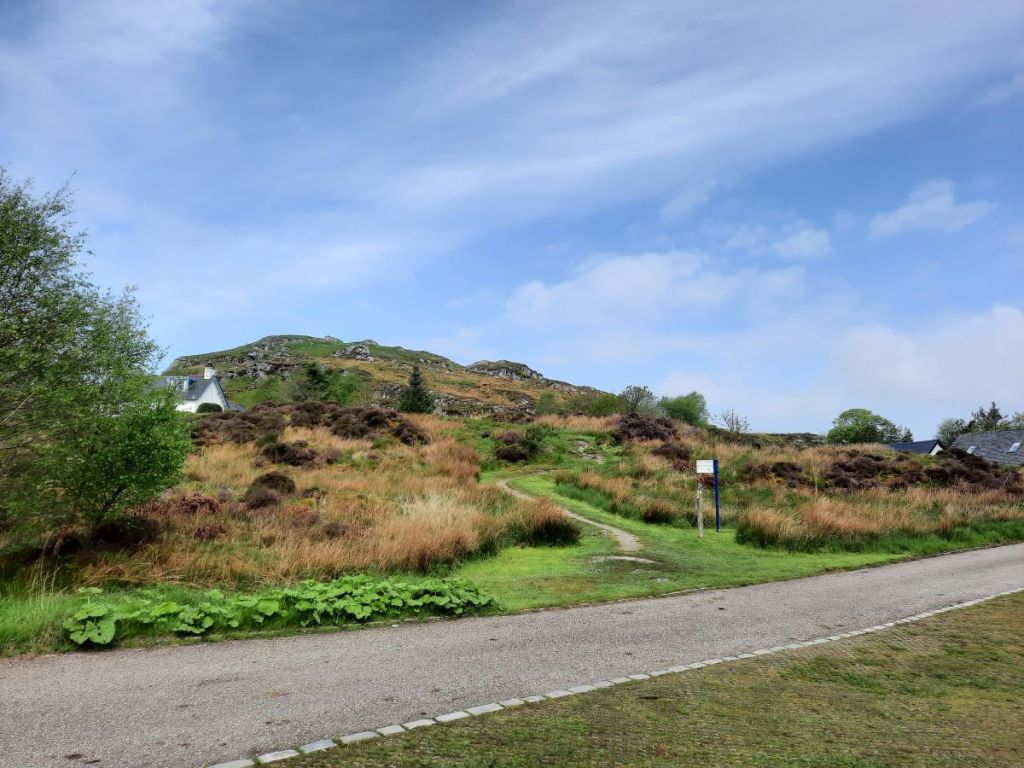
Dungal was wounded in battle in 734 (Dun Leithfinn – possibly on the island of Colonsay: was that where he was holding Bridei?) and fled to Ireland but in 736 he was captured (perhaps back fighting in Dal Riadan territory), as was his brother Feradach. The location may have been around the Gaelic capital of Dunadd fort which was captured by Onuist in a ferocious onslaught. Onuist devastated the lands around it and burned an unidentified place called Creic (which may signify the rock of Dunadd). Onuist’s son Bridei died in that year too – we do not know if he was still in captivity when that happened, or had been released when Dungal fled two years earlier and was now fighting alongside his father and uncle. This uncle, Onuist’s brother (another Talorc, but named in the diminutive Talorcan) then led the Picts against Muireadhach, the king of Cenél Loairn. The battle took place at Cnoc Cairpri in Calathros “between lakes” and the result was a complete victory for the Picts. Muireadhach fled and “many of his nobles fell”[7]. Again we have no certainty with the location, although Fraser[8] has suggested that it may have been in Benderloch between Loch Etive and Loch Creran, north-east of modern Oban. This would make sense if Onuist was effectively bringing the battle to Loairn.
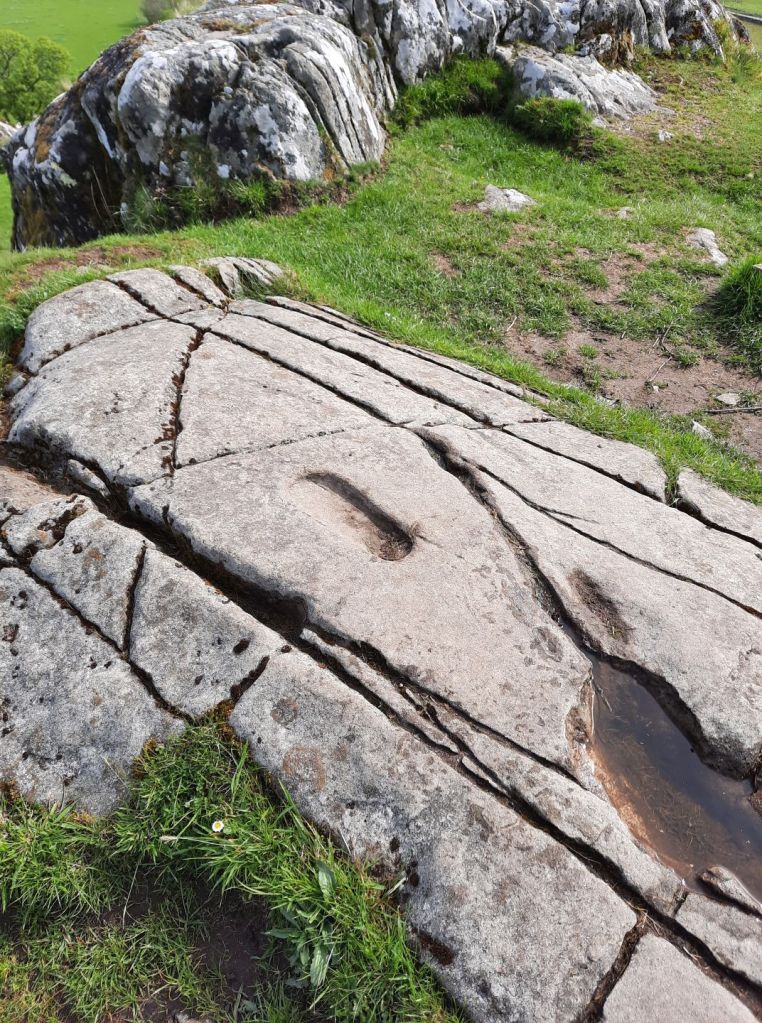
By 741, Onuist had subdued the Scots. In that year there was further fighting between the two kingdoms at Druimm Cathmail (location unknown[9]). The Annals describe in this year:
“Percutio Dal Riatai la h-Oengus m. Forggusso.”[10]
This is usually translated as the “smiting of Dal Riada by Onuist (Angus, son of Fergus)” and the Latin word does mean something like strike or hit, similar to its English derivative of “percussion.” Onuist was now the most powerful leader north of the Forth-Clyde line, and this is illustrated by the lack of evidence of independent kings of Dal Riada from now until the 760s. Having united the Picts under him and with the Dal Riadan Scots also under his rule, perhaps it was time to look south in his pursuit of absolute authority?
[1] “Dungal de reghno iectus est” Annals of Tigernach 726.4
[2] “Clericatus Eachada.” Annals of Tigernach 731.2
[3] Although technically Naiton may have still be the Picts’ king at this point, albeit with Onuist’s support
[4] Fragmentary Annals of Ireland 733; see also Annals of Tigernach 733.4
[5] Annals of Ulster 734.5: “in aqua demersus est”; Annals of Tigernach 734.4: “báidhedh”
[6] Annals of Ulster 739.7, Annals of Tigernach 739.6
[7] Annals of Ulster 736.2
[8] From Caledonia to Pictland, p300
[9] Could this simply be related to the Irish word cath (battle)?
[10] Annals of Ulster 741.10


Leave a comment