
A name which appears in the Irish Annals between 839 and 845 is Turges (or Turgeis, Tuirgheis or Turgesius), a Norse chieftain fighting in Ireland. This post will look at this character – and what he represented – but first it might be helpful to remind ourselves of what was happening in Ireland at that time.
In Vikings v Picts, Scots, Irish and Anglo-Saxons I listed a number of “viking” attacks on the island and how the northmen were starting to establish permanent or semi-permanent positions there, reflected in the increasing intensity of battles reported in the annals. We also saw the first record of a viking name, Saxolb, who is described as leader of the foreigners and is reported to have died at the hands of the Ciannacht[1].
In 837 a fleet of sixty ships was seen on the River Boyne and a second fleet – also of sixty ships – on the Liffey[2]. The Annals seem clear that these were separate fleets. An Irish victory by the men of Brega at Mughdhorna Breagh, a little further north but also on the east coast[3], where sixty score (120) vikings were slaughtered, was followed by a defeat by the invaders at Inber na mBarc, in County Cork[4], where the number of people killed was said to have been uncountable and without precedent. Indeed the numbers involved – if true – are beginning to be noticeable. Two fleets of sixty ships suggests a naval force of around 8,400 and we are perhaps now looking at a concerted invasion and occupation stratagem.
This can be confirmed in 839 where the records state that a raiding party of the foreigners were based on Lough Neagh (in Northern Ireland), which they used a base to plunder the nearby states and churches.[5] Two years later they were still there.[6] Also in 841 we are told that the vikings established two “longphorts” on the east coast – at Dublin and, around forty miles north, at Linn Duachaill.[7]
Longphorts were fortified camps near the shore (or a river), often where one river was joined to another, giving extra protection. These bases would often develop into trading ports. The Annals of the Four Masters also states how they could be used for holding prisoners, telling us that after raiding Louth from their base at Lough Neagh, the foreigners “took many bishops and other learned men as prisoners, and carried them to their longphort, after having killed many others.”[8]
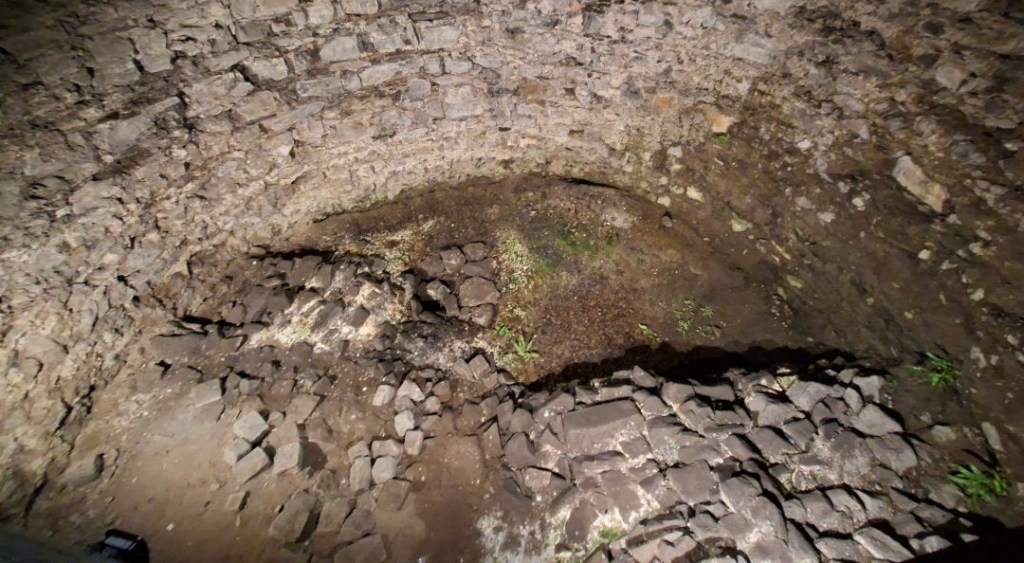
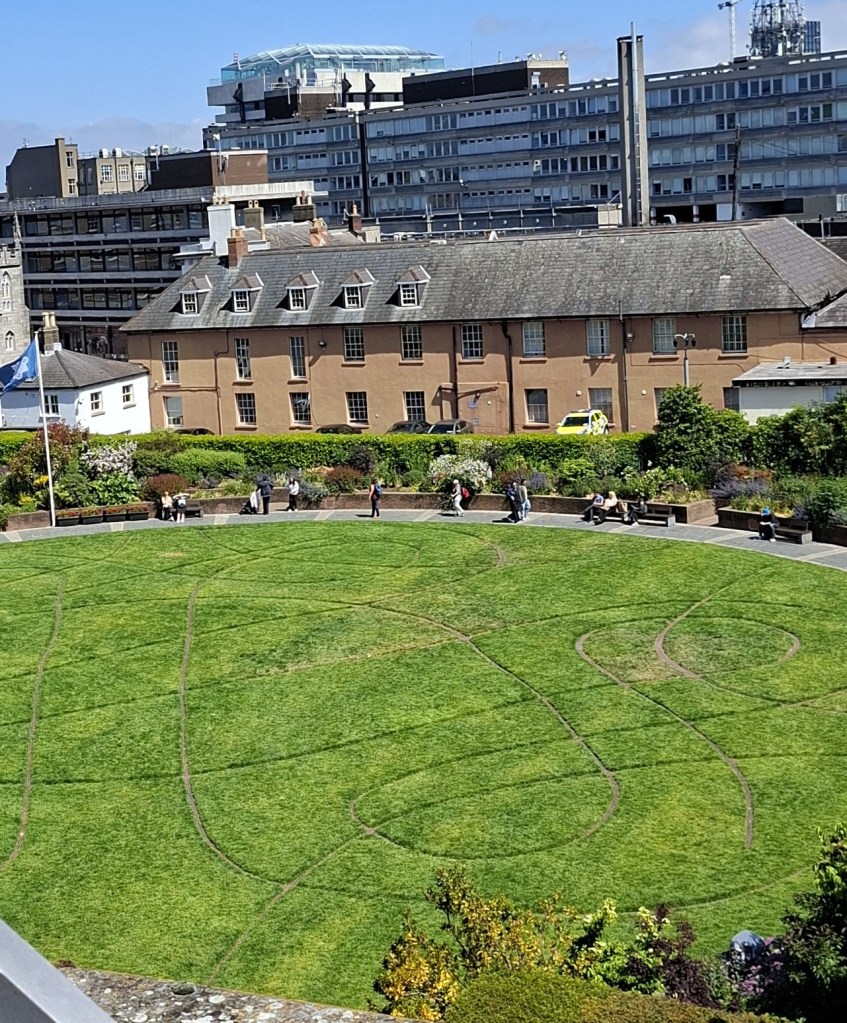
The site of the longphort at Dublin (from where the vikings launched attacks against the Laigin and the Ui Neill[9]) is not certain, but it is likely to have been at Kilmainham in the west of the city – a substantial Viking burial ground has been found nearby. There was already an Irish settlement there but the area soon became controlled by the Vikings and its importance as trade centre enabled it to grow over the years into a substantial town. Dublin is the Irish-language version of Blackpool, although this particular water feature (the “black pool”) no longer exists. It continues to be reflected visually by the small park just outside the castle – the Dubh Linn Gardens. The dating of the foundation of these longphorts (longphuirt is the Irish plural) is usually given as 841 as per the Annals.
Turges is first mentioned in these in the year 845 although his story has, as we have found before, been somewhat embellished over the years.
For the previous year (844) we are told by the Annals of Ulster[10] that Clonfert had been “burned by heathens from Lough Ree.” In 845 these same heathens, led by Turgesius, once again burned Clonfert but also “Cluain Moccu Nóis with its oratories … and Tír dá Glas and Lothra and other monasteries,” having plundered Connacht and Mide.[11]
An identical entry is given in the Chronicon Scotorum (845.3) while the Annals of the Four Masters (843.13) report that Tuirgheis, was the “tighęrna Gall for Loch Ribh” – the leader of the foreigners on Loch Ribh – while the much later Annals of Clonmacnoise (842.3), of which only a 17th century English translation survives, call him “Turgesius Prince of the Danes.”
There have been attempts to link him to earlier raids. Back in 1916, W. O’Halloran published his “Early Irish History and Antiquities and the History of West Cork[12]” in which he stated that:
“Turgesius landed in the north of Ireland about 831 and succeeded in uniting under his own command the scattered hordes of Northmen. He directed his first efforts against Armagh in 832. The Christian Primate, Forman, fled at his approach, and carrying with him the relics of the Cathedral, sought shelter in the south. Turgesius usurped the authority of the Primate. Soon after a large fleet arrived, which he divided into three parts…
“The wife of Turgesius, who was a pythoness[13], delivered her oracle from the High Altar of the Cathedral of Clonmacnoise. With a general’s keen eye Turgesius saw the advantages of Ath-Cleath (Dublin), so in 837 he took the place and erected a fortress… He may be called the founder of Dublin.”
This early 20th century view comes perhaps from the tales told by people like Gerald of Wales – who we have seen also contributed to the legends surrounding Kenneth McAlpin (see Kenneth MacAlpin Part II) – who wrote The topography of Ireland and The history of the Conquest of Ireland in the early 13th century.
This work tells us that, for the year 838:
“In the time of this king Eedlimidius, the Norwegians landed on the shores of Ireland with a large fleet, and taking possession of the country with force, with furious heathen debauchery, destroyed almost all the churches. Their leader, whose name was Turgesius, with many conflicts and fierce battles, in a short time subjugated the whole island, and making a circuit through the kingdom erected castles in suitable situations all over the country. … After this, Turgesius governed the Irish kingdom in peace for some time; until he died, deceived by the trickery of girls.”[14]
Another source is the slightly earlier Cogad Gáedel re Gallaib (“The War of the Irish with the Foreigners”), which tells the story of the conflict between the “vikings” and the Uí Ímair dynasty in Ireland and culminates in the great Battle of Clontarf in 1014 between the Irish king Brian Boru (the Gael) and the foreigners (the Gall). The earlier chapters note that:
“There came after that a great royal fleet into the north of Erinn, with Turgeis, who assumed the sovereignty of the foreigners of Erinn ; and the north of Erinn was plundered by them, and they spread themselves over Leth Chuinn.’ A fleet of them also entered Loch Eathach, and another fleet entered Lughbudh, and another fleet entered Loch Eai. Moreover, Ard Macha was plundered three times in the same month by them; and Turgeis himself- usurped the abbacy of Ard Macha, and Farannan, abbot of Ard Macha, and chief comharba of Patrick[15], was driven out, and went to Mumhain, and Patrick’s shrine with him; and he was four years in Mumhain, while Turgeis was in Ard Macha.”[16]
“There came now Turgeis of Ard Macha, and brought a fleet upon Loch Rai, and from thence plundered Midhe and Connacht ; and Cluain Mic Nois was plundered by him, and Cluain Ferta of Brenann, and Lothra, and Tir-dá-gias, and Inis Celtra, and all the churches of Derg-dheirc,” in like manner ; and the place where Ota, the wife of Turgeis, used to give her audience was upon the altar of Cluain Mic Nois. The Connachtmen, however, gave them battle, in which Maelduin, son of Muirghes, royal heir apparent of Connacht, was slain.”[17]
According to these texts then:
- Turges was in charge of all of the northmen of Ireland, after arriving there with a fleet which he based at Lough Ree
- He plundered, as vikings do, but also took over the abbacy of Armagh and this lasted at least four years
- His wife, Ota[18], delivered her sermons from the pulpit at Clonmacnoise
A few chapters later in Cogad Gáedel re Gallaib, we are told:
“It was in this year (845) Turgeis was taken prisoner by Maelsechlainn; and he was afterwards drowned in Loch Uair.”[19] This compares with the version from Gerald of Wales in which Turges was deceived by the girls.
If we were to believe these accounts then, it would seem that Turges had been around in Ireland since at least 841, possibly before that, although there is nothing specifically here to back up O’Halloran’s view that Turges had arrived a decade earlier.
I will come back to his death in a moment, but there is one other source to look at. This is Snorri Sturluson’s Heimskringla. In The Saga of Harald Fairhair, we are told about two of Harald’s sons, Þorgisl and Froði:
“Þeim Þorgisli ok Fróða gaf Haraldr konungr herskip, ok fóru þeir í Vestrvíking ok herjuðu um Skotland ok Bretland ok Írland. Þeir eignuðust fyrst Norðmanna Dyflinni. Svá er sagt, at Fróða væri gefinn banadrykkr, en Þorgisl var lengi konungr yfir Dyflinni, ok var svikinn af Írum ok féll þar.”[20]
(“To Þorgisl and Froði, King Harald gave warships and they went on viking expeditions to the west, raiding in Scotland, Bretland and Ireland. They were the first of the Northmen who took possession of Dublin. And it is said that Froði was killed by drinking poison, but Þorgisl was king over Dublin for a long time but was betrayed by the Irish and killed.”)
Is Snorri’s Þorgisl the same man as our Turges? As well as the claim about Ireland, his death is (like the Gearld of Wales account) the result of a betrayal or a trap. Although some scholars, such as Donnchadh Ó Corráin, have suggested that the Old Norse version of Turges’ name is actually Þurgestr[21], not Þorgisl or Þorgerr, others accept the link between the names of Turges and Þorgisl[22]. However in this case, as we saw with some of the sagas in Arrival of the Norwegians: Early Kings and The Family of Ketil Flatnose, the chronology is not quite right. Harald was not born (I suggested there) until 850, five years after the death of Turges.
Whoever his father was, Turges’ death has been given some colour over the years. We saw above that the Cogad Gáedel re Gallaib noted how he was taken prisoner by Maelsechlainn and later drowned in Loch Uair. Returning to Gerald of Wales once more, we have the following description of the girls’ trickery:
“The Irish people lost no time in resorting to their usual arts of treachery, with complete success. Turgesius was at that time deeply in love with the daughter of Omachlachelin, King of Meath. The King, concealing his cunning, promised to give him his daughter, and to send her to a certain island in Meath, in Lough Erne, attended by fifteen excellent girls of high rank. Turgesius, being highly delighted, went to meet them at the appointed day and place, accompanied by the same number of nobles of his own nation. On his arrival in the island, he was met by fifteen specifically chosen courageous, but beardless youths, dressed as young women. Turgesius and his companions immediately embraced them and the “girls” killed them with their hidden knives.”[23]
This account is probably fantasy and reminds us of a standard plot line which is not unique in history. Most notably in a Norse context is the story in the Poetic Edda known as þrymskviða in which Thor and Loki disguise themselves as a bride and bridesmaid as they attempt to take back Thor’s hammer which has been stolen by the Giants. This ruse is successful and Thor manages to kill a number of the Giants, starting with þrymr, who had initially stolen the hammer.[24]
Instead we should return to the more prosaic version as related by the Annals.
The Annals of Ulster tell us that
“Tuirgéis was taken prisoner by Mael Sechnaill and afterwards drowned in Loch Uair.”[25]
This is repeated by both the Chronicon Scotorum[26] and the Annals of the Four Masters[27] and of course is the version given in Cogad Gáedel re Gallaib.
We have seen the ritual drowning of enemies before (compare the two Talorcs in Picts and Gaels: The Supremacy of Onuist, Part I) but who was Turges’ killer?
Although the spellings vary, Maelsechlainn (of the Cogad Gáedel re Gallaib), Omachlachelin (Gerald of Wales) and Maol Sechlainn (Chronicon Scotorum and Annals of the Four Masters) are all the same person named as Mael Sechnaill in the Annals of Ulster. He is introduced to us in those Annals in an entry in 839, killing an Irish rival, and then in 841 we are told that he killed Diarmait, son of Conchobar, after Diarmait tried to overthrow his (Mael’s) father, Mael Ruanaid, who was king of Mide.
Meal Sechnaill was therefore a royal prince and whether he was originally the next in line for the throne or not is uncertain. However, that position would be confirmed by the entry in the Annals just before his drowning of Turges when we are told that he killed his brother, Flann.[28]
I will discuss Mael further in a future post, but returning now to the northman Turges, there seems to be a strong case that he did exist, that he was a major leader of the invaders whose impact on parts of country was growing, and that he died at the hands of the Irish. As well as looking more at the soon-to-be Irish king named as his killer, I will go on to look at the “vikings” who followed Turges in their increasing attempts to take over Ireland and northern Britain.
[1] Chronicon Scotorum (CS) 837.6; Annals of the Fourt Masters (A4M) 836.16; Annals of Ulster (AU) 837.9
[2] A4M 836.10; CS 837.2
[3] CS 837.3; A4M 836.11
[4] A4M 836.12; CS 837.4
[5] AU 839.7
[6] AU 841.1; CS 840.1
[7] Near the village of Annagassan – see also Long-Sought Viking Settlement Found – ScienceNOW
[8] A4M 839.10: “ro ghabhsat braighde iomdha d’espuccoibh ⁊ do dhaoinibh eaccnaidhe foghlamtha, ⁊ ruccsat iatt dochom a longphort iar marbhadh sochaidhe oile leó bheós.”
[9] AFM 840.4; AU 841.4; CS 841.2
[10] AU 844.4
[11] AU 845.3
[12] Available here Danish Invasion of Ireland – History of West Cork
[13] a woman believed to be possessed by spirits and able to predict the future.
[14] Topographia Hibernica, Chapter XXXVII – “In hujus vero Fedlimidii regis tempore, Norwagienses in magna classe Hibernica litora appulerunt. Qui et in manu forti terram occupantes, et gentili furore debacchantes, ecclesias fere omnes destruxerunt. Horum autem dux, Turgesius vocatus, multis variisque conflictibus et bellis atrocibus totam sibi insulam in brevi subjugavit; et pererratis totius regni finibus, totam undique terram locis idoneis incastellavit…. Turgesius itaque regnimi Hibernicum aliquamdiu pacifice rexit, donec puellarum dolo delusus occubuit.” original text available at Giraldi Cambrensis opera : Giraldus, Cambrensis, 1146?-1223? : Free Download, Borrow, and Streaming : Internet Archive
[15] A church position which chose the abbots who succeeded Columba
[16] Chapter IX. Translation by James Henthorn Todd (1805-1869) and available in parallel text here: Cogadh Gaedhel re Gallaibh.
[17] Chapter XI. Translation by James Henthorn Todd (1805-1869) and available in parallel text here: Cogadh Gaedhel re Gallaibh.
[18] Surely not confusing her with Auð who also married a Hiberno-Norse chief? – see Arrival of the Norwegians: Early Kings and The Family of Ketil Flatnose
[19] Chapter XIV
[20] Haralds saga hins hárfagra – heimskringla.no
[21] Vikings in Ireland and Scotland” 1998, available online here
[22] For example Clare Downham: “Viking Kings of Britain and Ireland” page 276
[23] Topographia Hibernica, Chapter XL – “Gens Hibernica ad consuentes artis iniquae decipulas non inefficacy molimina statim recurrit. Cum igitur ea tempestate filiam regis Medensis, scilicet Omachlachelini, Turgesius adamasset, rex ille, virus sub pectore versans, filiam suam ipsi concedens, ad insulam quamdam Mediae, in stagno scilicet Locherino, illam cum quindecim puellis egregiis ei missurum se spopondit. Quibus et Turgesius gavisus, cum totidem nobilioribus gentis suae, statuto die et loco obviam venit. Et inveniens in insula quindecim ado lesvcentes imberbes, animosos, et ad hoc electos, sub habitu puellari dolum palliantes, cultellis, quos occulte secum attulerant, statim inter ipsos amplexus Turgesius cum suis occubuit.” original text available at Giraldi Cambrensis opera : Giraldus, Cambrensis, 1146?-1223? : Free Download, Borrow, and Streaming : Internet Archive
[24] For a more comprehensive list of similar examples see “The Death of Turgesius” by James Stewart in Saga Book XVIII (1973), available here
[25] Annals of Ulster 845.8: Turges du ergabhail la Mael Sechnaill & badudh Turges i l-Loch Uair iarum.
[26] Chronicon Scotorum 845.6: Turges do ergabad la Maol Sechlainn mac Mail Ruanaidh et badhadh Turges i lLoch Uair. (Tuirgéis was taken prisoner by Mael Sechnaill and drowned in Loch Uair.)
[27] Annals of the Four Masters 843.15: Tuirgheis do ghabháil la Maol Seachlainn, mac Maol Ruanaidh, ⁊ a bhádhadh h-i Loch Uair iaramh, tré mhiorbhaile Dé ⁊ Ciaráin, ⁊ na naemh archęna. (Tuirgeis was taken prisoner by Maelseachlainn, son of Maelruainaidh; and he was afterwards drowned in Loch Uair, through the miracle of God and Ciaran, and the saints in general.)
[28] Annals of Ulster 845.7: Orggain Donncadha m. Fhollomain & Flainn m. Mael Ruanaig la Mael Sechnaill m. Mael Ruanaidh (Donnchad son of Follaman and Flann son of Mael Ruanaid were killed by Mael Sechnaill son of Mael Ruanaid.)

 The Northern Tapestry
Leave a reply to Websites via Bluesky 2025-06-09 – Ingram Braun Cancel reply