
It is now time to bring in the island of Iceland to this Tapestry.
Already we have seen (in The Islands of Sheep: Settlement of The Faroes) how during the 9th century, the Faroe Islands were being populated initially by religious hermits or anchorites from Ireland (according to Dicuil, an Irish monk[1]) and then by Scandinavians, and it now seems inevitable that something similar was always going to happen to the larger island which lies around 400 miles further to the north west and therefore easily accessible by boat within a few days.
The Icelandic Book of Settlements (Landnámabók) is an astonishing record of the foundation of Iceland. It names the original settlers, the land they took, and their descendants. Probably dating originally from the 11th century, it was written down at least two hundred years after some of the events it describes and while its absolute accuracy may be questioned, it is likely to have survived initially through oral history. Many of the events which it relates can be confirmed with other histories and sagas[2].
Landnámabók survives in five versions and two of the earliest are considered here[3]:
- Sturlubók (thought to be from 1275 or just after)
- Hauksbók (based on Sturlubók and another 13th century version which is now lost)
These two versions of Landnámabók are initially almost identical[4], with one significant difference which I will return to later, and after giving a little bit of background about Iceland, they tell us about three initial explorers who visited the land before a fourth began the great settlement which continued over the following decades. Before looking at these explorers, it is worth considering the geographical and historical background to the place.
In both versions we are told that people were aware of Iceland long before the 9th century and this is explained by linking it to an unidentified land which had been known about for over a millennium:
“In his book “On the Reckoning of Time” written by the holy priest Bede, he mentions an island called Thule, said in other books to lie six days’ sailing to the north of Britain. He says there is neither daytime there in winter nor night in summer when the day is at its longest. Learned men claim that Iceland is called Thule because, throughout the land (Iceland), the sun shines at night when the day is longest, while the sun is not seen on the day when the night is longest.”[5]
Bede died in 735, more than a century before Iceland is said to have been “discovered”[6]. Thule on the other hand was, as mentioned above, a name which had been used for over 1,000 years by this stage. The first mention that we know of was by a Greek navigator called Pytheas of Massalia (Marseille) and dates back to around 320 BC. His work “On the Ocean” survives only in fragments or quotations in the works of later historians. One of these was the Roman writer, Pliny the Elder who died in AD 79 while rescuing people from the eruption of Mount Vesuvius which flattened Pompeii and Herculaneum on the Italian coast near modern-day Naples. In his “Natural History,” when talking about how the hours of daylight differ across the world at various degrees of latitude, Pliny notes that the longest day lasts less than 13 hours in Meroe (Egypt), but 17 hours in Britain. When telling us how the lands at the poles have continuous daylight for six months at a time in summer and continuous night for six months in winter, he exaggerates, saying:
“Pytheas of Massalia writes that this takes place on the island of Thule, six days’ voyage northward from Britain, while others also affirm that it happens on Mona (Anglesey), which is about two hundred miles from the British town Camulodunum (Colchester)” [7]
Bede is clearly influenced by this account in “On the Reckoning of Time” (De Temporum Ratione) and also quotes the excerpt above, although – perhaps because he had better knowledge – omits the bit about Anglesey.[8] This then finds its way into Landnámabók which adds in the connection to Iceland, pointing out that “Bede died more than a hundred years before Iceland was inhabited by the Norwegians.”
The thrust of the argument in Landnámabók is similar to what we saw regarding the Faroe Islands – that Iceland was settled by the Norse, although before them:
“there were other people there, called Papar by the Norwegians. They were Christians and were thought to have come overseas from the west, because people found Irish bells, croziers and lots of other things… Besides, English sources tell us that sailings were made between the lands (England and Thule) at this time” [9]
What then of the three explorers?
The first of these according to Sturlubók was someone called “Naddodd the Viking” who had set out from Norway on his way to the Faroe Island. However his ship, with its crew, drifted west and “found a great land. They went ashore in the Eastern Firths, to the top of a high mountain, and looked round about, far and wide, to see if they could observe smoke, or any inkling of the land being settled, but they could not see anything like that. In the autumn they went on to the Faroe Islands and as they sailed away, a lot of snow fell upon the mountains. Therefore, they called the place Snowland, while the place where they had originally arrived in the Eastern fjords is now called Reydar Fell.[10]”
Hauksbók also tells us that Naddodd was a viking – actually a great (mikill) viking – who was the brother of Oxen-Þórir, a relative of Ólvir Barnakarls. This latter name pops up elsewhere in Landnámabók where his second name is often translated as “children’s man” or “child-sparer” because he didn’t have children tossed around on the points of spears, as was usual for vikings at that time! (according to Landnámabók). The genealogical links given for Olvir later in Landnámabók make it plausible for these to be the same person[11].
Getting back to the main story, Hauksbók describes how Naddodd left Norway seeking the Faroe Islands as that was the only place he could get some peace, but ended up sailing towards “Garðarsholm” and arrived at Reydarfjord in the Eastern Fjords. Now this is the main difference between the two versions that I mentioned above – i.e. in Sturlubók, Naddodd is the first explorer to arrive and names the place Snowland; however in Hauksbók, the place is already known as Garðars Holm (Garðar’s Island) by the time Naddodd reaches it and the preceding chapter in that version tell us that Garðar was the son of Svávarr the Swede. He had estates in Sjóland (Zealand, now in Denmark), but he had been brought up in Sweden. He went to the Hebrides to claim the paternal inheritance of his wife; but when he sailed through the Pentland Firth, a storm carried him off course and drove him westwards into the ocean. He reached the new land east of what became known as Horn and made harbour before sailing round the land and understood that it was an island:
“He came to the fjord which he called Skjálfandi, the ‘Shaking’. There they launched a small dinghy and his slave Náttfari went into it. Then the rope broke, and he came into Náttfaravík ‘Náttfari’s Bay’, beyond Skuggabjǫrg Cliffs. But Garðarr came to the other side of the fjord and spent the winter there; therefore he called that place Húsavík, ‘Bay of Houses’. Náttfari remained behind together with his slave and maidservant; therefore that place is called Náttfaravík ‘Náttfari’s Bay’. Garðarr sailed back eastwards and praised the land a lot and called it Garðars Hólm[12]”
Garðar does also appear in Sturlubók, but in that version he arrives after Naddodd. The story is similar although we are told that Garðar deliberately set out to find Snowland and was guided there by his mother’s second sight. Sturlubók provides a less clumsy account about Náttfaravík:
“In the spring, when he was ready for sailing, a boat drifted away from him containing a man called Nattfari, a slave and a bondswoman. Nattfari settled there in that place which has since been called Náttfaravík.”
Finally, Sturlubók tells us that when Garðar returned to Norway[13], he praised the new land much which was then known as Garðar’s Holm, and which “was covered with wood between fell and foreshore.”
In summary then we have two versions:
Sturlubók:
- The Viking Naddodd accidentally arrives at the new land, having missed his target of the Faroes. He names it Snowland and praises it.
- The Swede Garðar sets out to visit Snowland, guided by his mother’s second sight. He is also full of praise for the place which he renames Garðar’s Holm.
Hauksbók:
- Garðar, a Swede, but living in Norway, is driven off course during a visit to Scotland (where he was attempting to claim his mother’s inheritance) and arrives in the new land. He names it Garðar’s Holm and goes back to Norway, full of praise.
- Naddodd, the great Viking, sets out for the Faroes to get some peace but ends up in Garðar’s Holm by accident. When he leaves, seeing the heavy snow, he renames the place Snowland.
At this stage the two versions come together and the name of the third explorer is the same in both: Flóki, son of Vilgerðr. In Sturlubók he is a “great viking[14]” who sets out from Norway to find Garðar’s Holm. He stops off at the Shetland Isles where his daughter Geirhild is killed. Three of his sailing companions are mentioned by name: Thorolf (a bond farmer), Herjolf and Faxi the Hebridean. Hauksbók differs slightly in that Flóki, while also a “great Viking[15]”, sets out from Norway to find Snowland, rather than Garðar’s Holm. After visiting Shetland (where Geirhild perishes), he then goes to the Faroes where he marries off another daughter[16]. Neither this daughter nor her husband is named, but we are told that one of her descendants is Thrond of Gata who lived 100 years later and will become the main character of Faereyinga Saga[17].
Both versions tell us that Flóki took three ravens with him. As he was nearing his destination (or at least he thought he was), he set the first one free, but it flew back over the stern of the ship. A little later the second bird was released but it simply returned to him. Finally when the third one was set free it flew on ahead and disappeared in the distance. Following it, the sailors eventually reached dry land.
As an aside, this story is similar to the biblical tale of Noah and his ark. After 40 days of the flood, Noah sent out a raven which flew round and round until the waters dried up (and presumably found something it could eat?). Next Noah sent out a dove three times. The first time the bird returned with nothing; the second time it came back with an olive leaf; the third time it did not return. Noah knew then that the waters had subsided enough and they would soon be safe[18].
Flóki and the others sailed south round the large island and then north, passing the Reykjanes Peninsula and catching sight of the Snaefellsness glacier which lies across the Faxafloi bay from modern-day Reykjavík. The bay is said to have been named after Flóki’s Hebridean companion. They continued northwards and settled near Vatnsfjörður in the north-west. There they discovered that the fjord was full of animals and fish and they did not think to make any hay for the livestock that they had brought with them. Winter came and their livestock starved. Spring followed but was bitterly cold. Flóki walked up a mountain and seeing a fjord full of winter ice, decided to rename the place “Iceland.” They had planned to return to Norway the following summer but somehow didn’t get round to it. They lost Herjolf, then found him again in the winter, before sailing home the following summer.
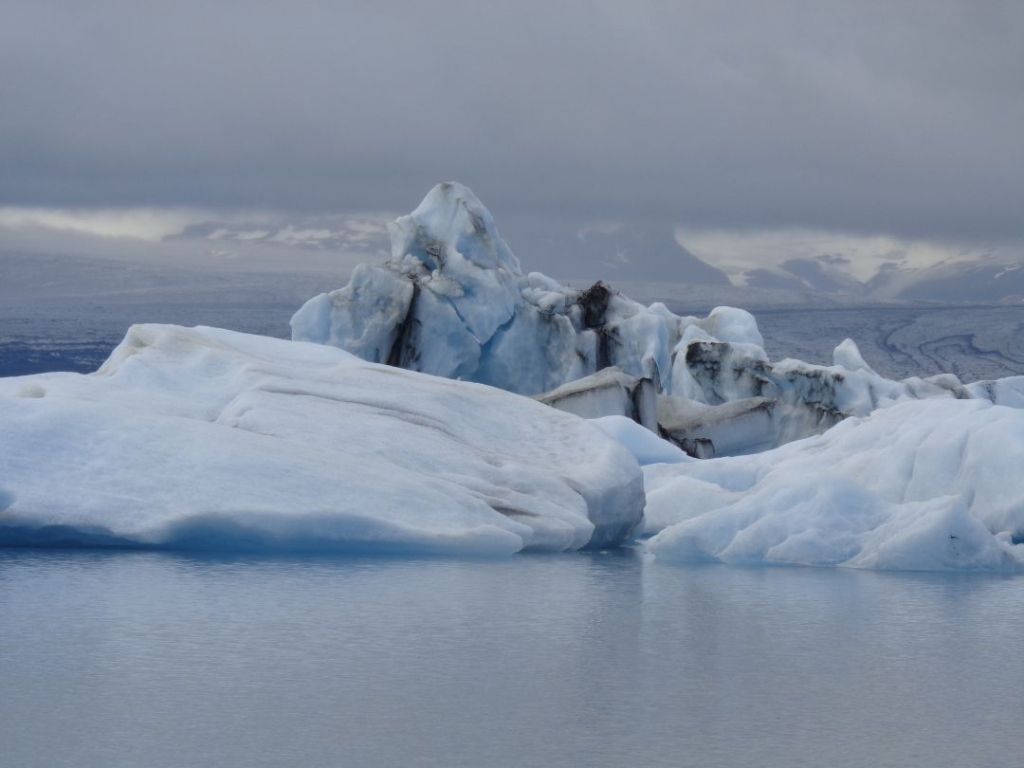
When they got back they were understandably questioned about the place. Flóki was less than impressed, and spoke ill of it, but Herjolf included both the good and the bad sides in his assessment. Thorolf meanwhile was immensely complimentary (although I think it more likely that he was being sarcastic) and said that butter dripped from every blade of grass. After that he was nicknamed “Thorolf Butter.”
Trying to fit these stories into a timeline is fraught with difficulty, but as stated elsewhere, part of the fun in this tapestry is to try and do just that. If we assume that the stories contain any sort of historical truth, then my guess is that these explorations would have taken place in the 860s.
Landnámabók tells us that Iceland was discovered and settled when the following European leaders were in place. I have added in some tentative dates, largely following Pálsson and Edwards).
- Louis, son of Louis, King of East Francia (843-876)
- Leo (886-912) and his son Alexander (912-913) in Byzantium
- Harald Fairhair in Norway (872-932)
- Eirik Eymundsson[19] (died 871) and his son (possible Bjorn, who died in 932) in Sweden
- Gorm the Old in Denmark (died 950s or 960s?)
- Alfred the Great (871-899) and his son Edward (899-924) in Wessex
- Kjarval in Dublin – probably Cerbal of Ossary who died in 888 – see Vikings in Black and White
- Early Sigurd the Mighty in Orkney (possibly died in 892)[20]
- Popes Adrian (867-872) and John the Fifth (872-888)
This presents a broad timescale of around 90 years, beginning in the 840s. Given that our three explorers are deemed to be the precursors to settlement – if of course they actually existed – the 860s seems to fit in with their voyages[21].
None of the main characters mentioned to date (with the exception of Nattfari) settled there. That legend – the discovery of Iceland – belongs to a different character whom I will look at in a later post. However before ending this one, it is useful to look at some of the more recent scientific evidence which has emerged.
In the 2025 published article Environmental DNA Reveals Reykjavík’s Human and Ecological History, and reported in The New Scientist, the authors argue that DNA evidence suggests a human presence “decades before the long-accepted arrival date” and that “Viking Norse people may have arrived in Iceland as early as 810.” This is based on the discovery of sediment layers from the small lake/pond Tjörnin in Reykjavík showing a marked increase in levoglucosan, a compound which is sometimes found when biomass is burned, i.e. as a result of human activity.
The report also proposes that since evidence of a significant rise in birch and willow pollen between 900 and 1200 was seen, the Norse settlers were not necessarily the forest- destroyers that history has given them the reputation for.
In summary, the beginnings of Iceland as a society are surrounded by a mist which looks a little bit like that which surrounds the Skógafoss waterfall in southern Iceland or resembles the fog that hangs around the cliffs of the Westfjords. However a number of characters and stories have become part of the foundation legend, while some of the details in those stories contain elements if undeniable truth – for example, the links to the Scandinavian lands and the northern British Isles. For those reasons, I have included them as part of this Northern Tapestry.
[1] See Dicuil’s “De Mensura Orbis Terrae” 7.15 written c. 825 – available at https://archive.org/details/dicvililiberdem00dicugoog/page/n64/mode/2up?ref=ol&view=theater
[2] See also: A Very Short Interlude Across the North Sea – The Northern Tapestry
[3] The other three versions are known as Melabók (from the early 14th century with only two pages extant),
Skarðsárbók (early 17th century) and Þórðarbók (17th century)
[4] Both versions can be found online at Lándnámabok I-III, with Hauksbók starting here and Sturlubók here
[5] Based on Sturlubók version: “I Alldarfars bók þeirre er Beda prestr heilagr gerdi er gelid eylanndz þess er Tili heiler ok aa bókum er sagt at ligi vj. dægra sigling i nordr fra Bretlanndi. Þar sagde hann eigi koma dag sa wetr ok ei nott aa sumar þa er dagr’ er sem leingstr. Til þess atla vitrir menn þat haft at Island sie Thile kallat at þat er vida aa. landinu er sol skin vmm nætr þa. er dagr er sem lengzlr en þat er vida vmm daga er sól ser ei þa er nott er sem lengzt.” Hauksbók is almost identical: “Í Alldar fars bók þeiri er Beda prestr heilagr gerdi er getid eylandz þess er Thile heiter (ok) a bókum er sagt at lici .vi. dægra sigling nordr fra Bretlandi. þar sagdi hann ei koma dag a vetr ok ei nott a sumar þa er dagr (er) lengztr. Til þess ætla vitrir menn þat haft at Island se Thile kallat at þat er vida a landinu at sól skinn um netr þa er dagr er lengstr. enn þat er vida um daga at sol ser ei þa er nott er lengs.”
[6] The Book of Settlements is clearly not referring to him as one of those “learned men” linking the Iceland and Thule.
[7] Pliny The Elder: “Natural History” Book 2, Chapters 186-7: “quod fieri in insula Thyle Pytheas Massiliensis scribit sex dierima navigatione in septentrionem a Britannia distante, quidam vero et in Mona, quae distat a Camaloduno Britanniae oppido circiter ducentis milibus, adfirmant.”
[8] Bede: “The Reckoning of Time (De Temporum Ratione)” Chapter 31, available here: Beda Venerabilis
[9] Based on the translation by Hermann Pálsson and Paul Edwards. Sturlubók specifically mentions two places where such items were found: “Papey avstr ok i Papyli”
[10] “Þeir gengu vpp i Austflordum aa fiall eitt halt ok sast vinm vida ef þeir sæi reyki eda naukkur likindi til þess at landit væri bygt. ok sa þeir þat ekki. þeir foru apttr vm haustit til Færeyia. Ok er þeir sigldu af landinu fell snær mikill sa fioll. ok fyri þat kaulludu þeir landit Snæland. þeir lofudu miok landit. þar heiter nu Reydarfiall i Austfiaurduni er þeir haufdu at komit.” The author adds extra authority by mentioning that the wise priest (and historian) Sæmund (1056-1133) claimed this to be the case.
[11] Olvir’s great-granddaughter, Alfdis is said (chapter 379 of Pálsson and Edwards edition of Sturlubók) to be the wife of Olaf Feilan, the grandson of Auð the Deep-Minded. Later I will suggest a possible birthdate of 872 for Olaf. If we assume a similar birthdate for Alfdis, his wife, then three generations of 20 years would give a potential birthdate for Olvir of the early 810s.
[12] Hauksbók translation by Matthias Egeler (The Hauksbók Recension, Viking Society for Northern Research 2022, available here)
[13] “til Noreks”. Hauksbók says “austr” = east.
[14] “vikingr mikill”
[15] “vikingr mikill”
[16] Auð the Deep-Minded will do something similar later in this Tapestry
[17] See The Islands of Sheep: Settlement of The Faroes
[18] Genesis, chapter 8, verses 6-12
[19] Or Amundsson
[20] And who will feature in a later post
[21] Again, I emphasis that part of the fun in this series of posts is to try and create a potential timeline of possible figures, alongside a historical and occasional archaeological backdrop

 The Northern Tapestry
Leave a comment