

A short “family and friends” trip to Perthshire provided the opportunity to visit three Pictish Stones last weekend. All of these were Class II monuments – i.e. 8th or 9th century where Pictish symbols are accompanied by Christian designs.
1: Around one and half miles south of Pitlochry centre, and on the other side of the River Tummel, the Dunfallandy Stone stands on top of a mound. Access is fairly easy (a few steep steps) and the stone is in a glass case to (protect against the elements). Visited in the morning on a beautify crisp October morning with hardly a cloud in the sky. The disadvantage was the position of the sun which reflected strongly against the glass on the “cross side” and made the other side a little too dark. Nevertheless, the picture (the non-cross or rear side) clearly shows recognisable Pictish symbols such as Beast, Double Disk, and Crescent with V-Rod. Two human figures are seated and below them is someone on a horse.

The cross side includes a human being eaten by a fish-like creature – perhaps depicting the story of Jonah and the Whale – in the bottom left area.

The advantage of an early morning visit was lack of other traffic on the single-track road which leads to the hill (possibly the stone’s original site?) and it was possible to park just through the gateway before the short walk up the hill. However, that option may not always be possible so you may have to park a little further away, or walk the 30 minutes or so from the town.
2: Five miles south of Pitlochry and just off the A9, the Logierait Stone can be found in the village churchyard of the same name. This is another Class II Stone, with the cross-side facing east towards the A9. The stone, about one metre tall, is very weathered now but the Pictish symbols of Serpent and Rod beneath a horseman can just about be made out.
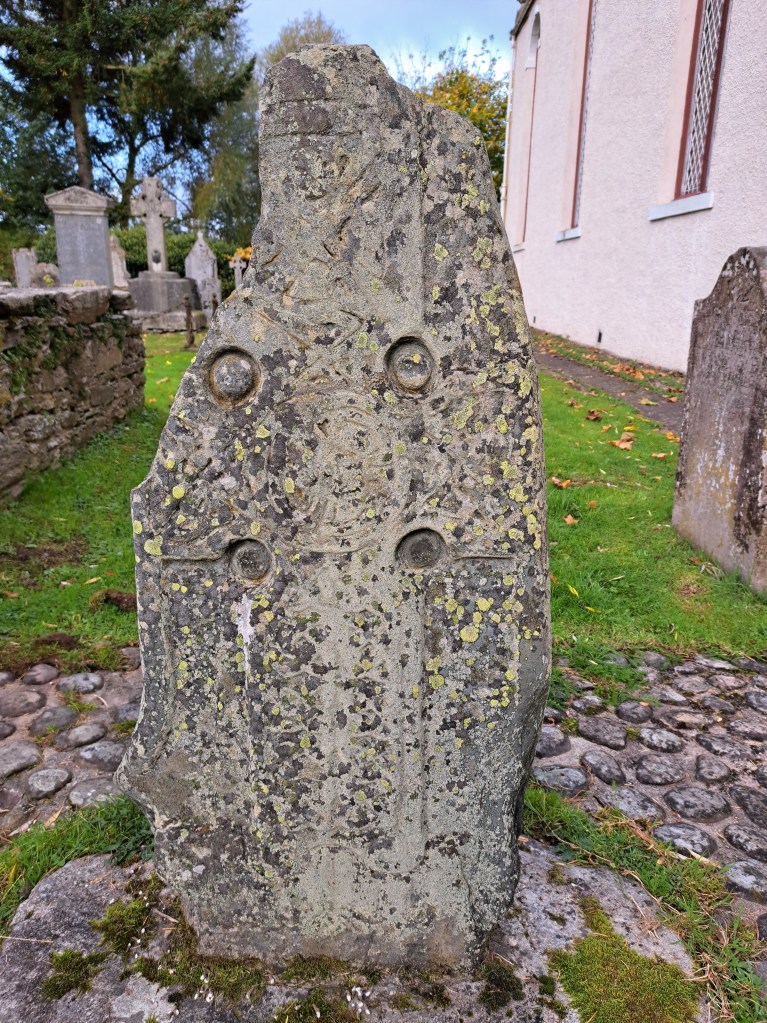
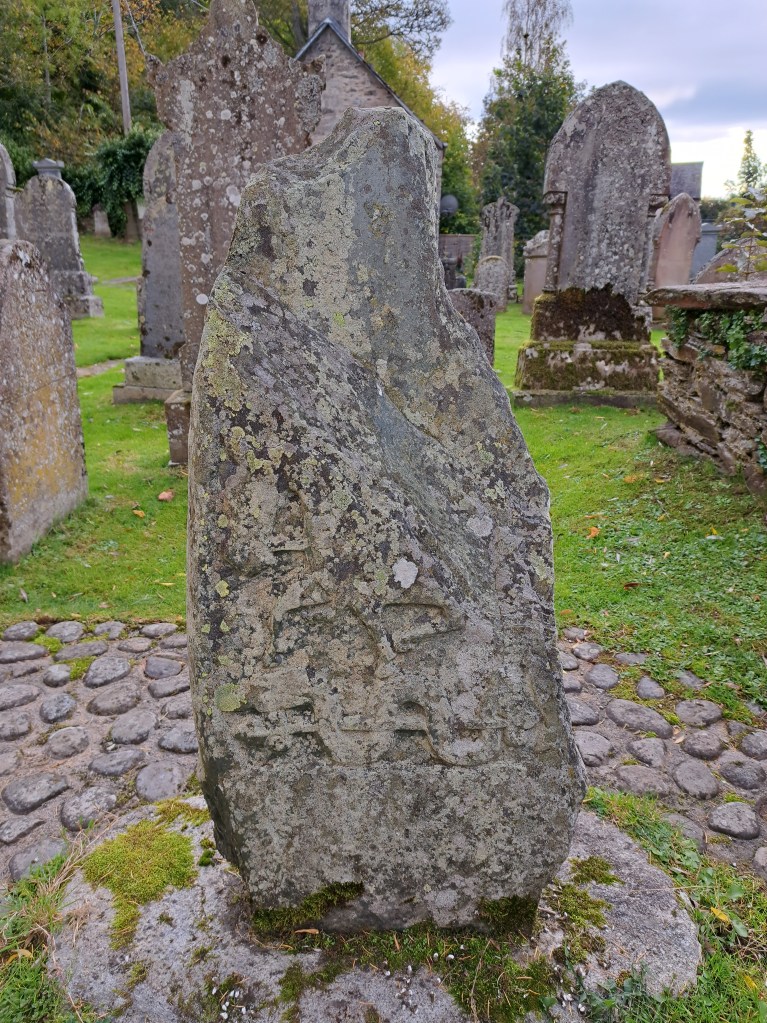
Not as clear as other stones, but given its proximity to the main road and easy access (no trudging across fields or up steep slopes as can often be the case elsewhere) it is certainly worth the few minutes it will take to see it in person. Undiscovered Scotland describes it as “not immediately impressive” but it is possible to make out the outline of the figures carved on it.
3: Finally, and a bit further away, is the Eassie Stone. Some 13 miles north of Dundee and about three-quarters of the way along the main route from Perth to Forfar, it can be found in the grounds of the ruined Eassie church. At just over two metres high, the stone is probably very near to its original location and is well-preserved – and will continue to be so as it stands in a protective enclosure.
The “cross side” displays two angel figures at the top (although one is mostly broken off), with animals depicted at the bottom right (including a stag and dog – perhaps a reference to hunting?) and a Pictish warrior bottom left. The other side contains obvious Pictish symbols – the Pictish Beast (sometimes described as an elephant or dolphin) above a Double-Disk with Z-Rod. Three Pictish warriors are below that and also a single figure who looks to be walking away from a potted plant (or small tree). This side has been damaged near the bottom but at least two cattle can be seen. The cattle appear to have tattoos!
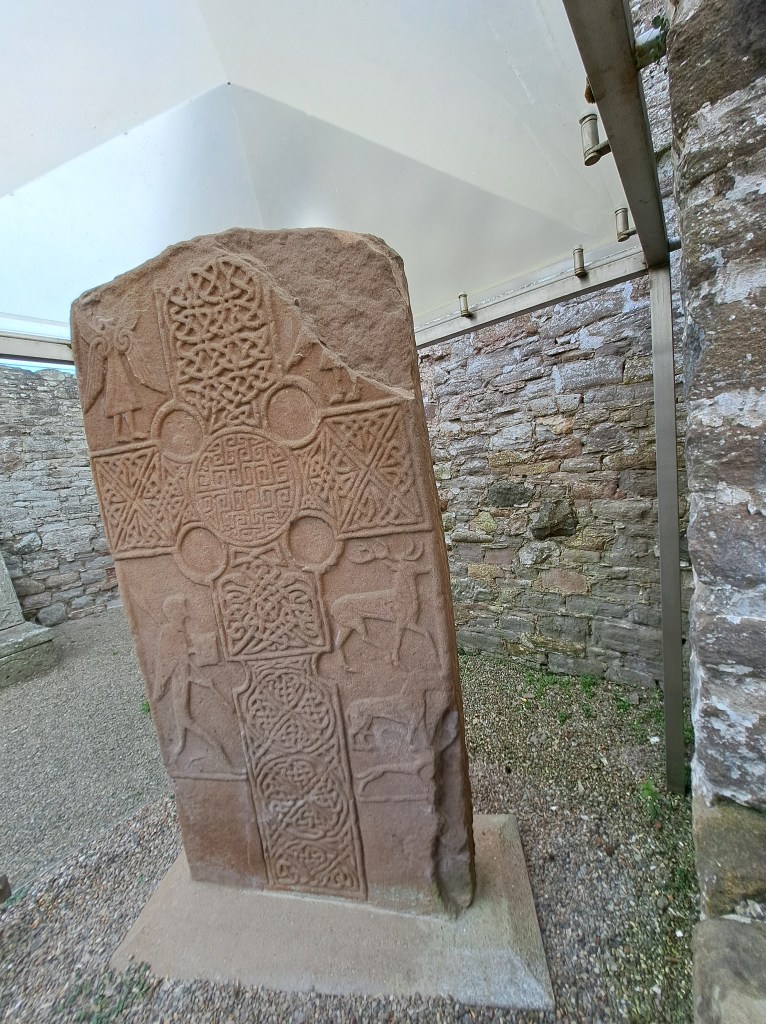
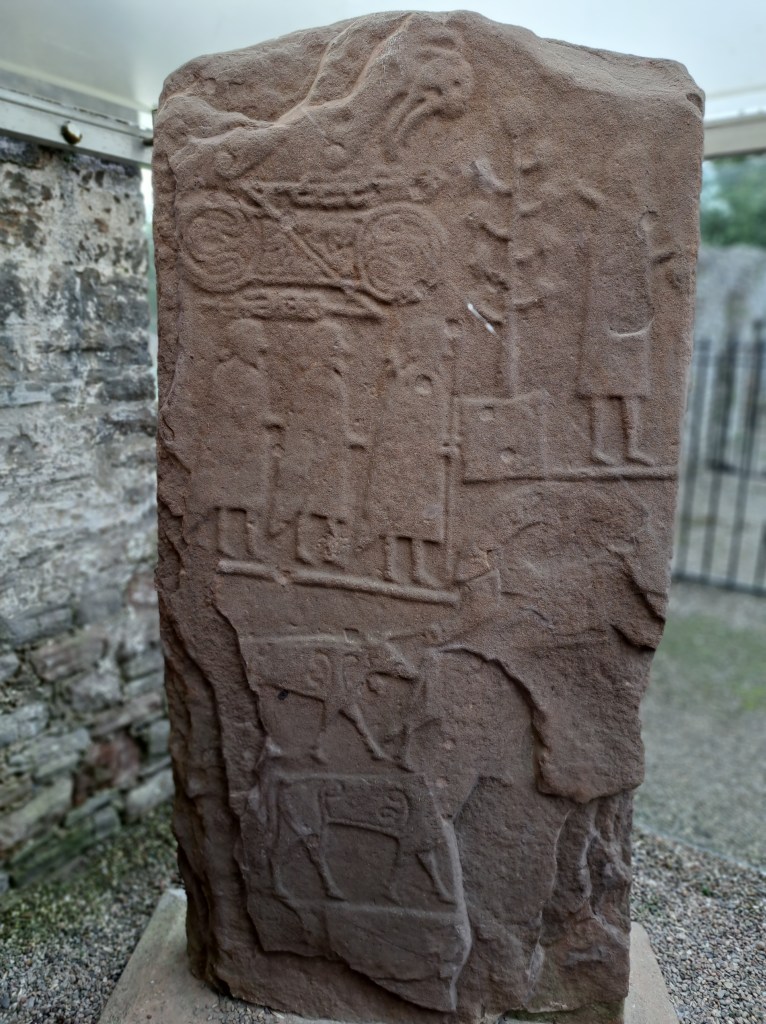
The stone was discovered in the late 18th century in the nearby burn and was moved to its current location in 1842. It shows, as is the case with Class II stones, the clear relationship between the early Church and Pictish heritage.
The Historic Environment Scotland Statement of Significance describes the stone as an “explicit expression of Christianity in Southern Pictland,” being “erected at a time when Pictish kings were actively promoting the development of the Pictish church during the late seventh/early eight centuries.”

 The Northern Tapestry
Leave a comment