
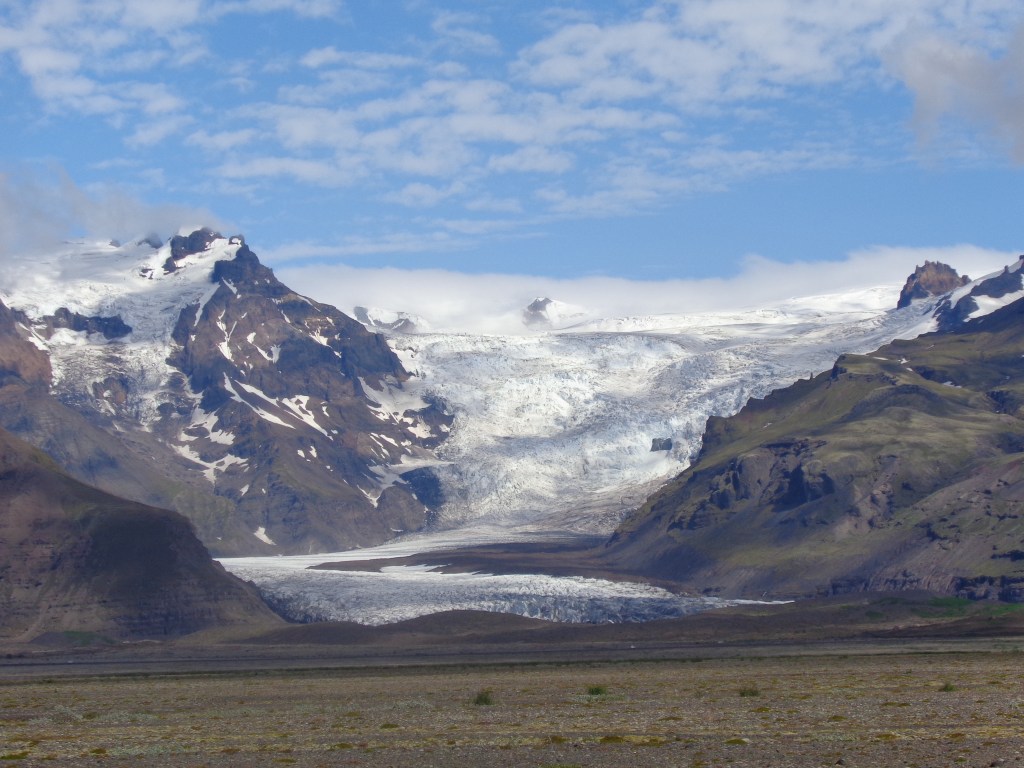
Traditionally Iceland was “discovered” or founded around the year 874 when Norwegian (and then northern British) exiles stumbled by chance on the North Atlantic island. However the Icelandic Book of Settlements (Landnámabók) states that:
En áður Ísland byggðist af Noregi, voru þar þeir menn, er Norðmenn kalla papa; þeir voru menn kristnir, og hyggja menn, að þeir hafi verið vestan um haf, því að fundust eftir þeim bækur írskar, bjöllur og baglar og enn fleiri hlutir, þeir er það mátti skilja, að þeir voru Vestmenn. Enn er og þess getið á bókum enskum, að í þann tíma var farið milli landanna
(But before Iceland was populated by Norwegians, there were other people there whom the Norwegians called “Papar”. These men were Christians and it is thought that they came over the sea from the West, because people found Irish books, bells, croziers and lots of other stuff, so it was clear they were Westmen (Irish). In addition, sources from English books say that there were sea crossings between the two countries.)
More recent archaeological evidence has backed up the theory that the 9th century settlers were not the first. In 2011, the remains of a cabin were found at Hafnir, close to the site of Iceland’s international airport on the Reykjanes peninsula. Analysis revealed that the cabin had been built sometime before it was abandoned around the year 770. This may have been a temporary outpost for hunters or fishermen from Northern Britain or Scandinavia (no other buildings were found nearby) rather than any men of God from Ireland or Scotland.
Despite the literary and archaeology evidence, it is probably fair to say that, other than a small number of traders or settled monks, Iceland was largely empty of human activity at the end of the 7th Century.

 The Northern Tapestry

Leave a comment